
IT consulting partner — used naturally in title, headings, and throughout body

Technology is no longer a back-office function — it is the engine of modern business. From automating core operations to building customer-facing digital experiences, the technology decisions your organisation makes today will define your competitive position for years to come. Yet for many businesses, navigating the complexity of enterprise technology, cloud platforms, custom development, and process automation is an overwhelming undertaking. This is precisely where an experienced IT consulting partner becomes invaluable. The right partner does not simply implement software — they become a strategic extension of your business, aligning technology with your goals, accelerating your digital transformation, and protecting your investment at every stage. But how do you identify the right IT consulting partner from an increasingly crowded marketplace? What separates a genuinely capable partner from one that overpromises and underdelivers? This guide outlines the key criteria every business should evaluate before making one of the most consequential technology decisions they will face. Why the Choice of IT Consulting Partner Matters More Than Ever The stakes involved in choosing an IT consulting partner have never been higher. Digital transformation projects are not isolated IT initiatives — they touch every department, every process, and every employee in your organisation. A poorly executed implementation does not just waste budget; it creates technical debt, disrupts operations, and erodes employee confidence in technology adoption. Conversely, a well-executed engagement with the right partner delivers compounding returns. Streamlined processes reduce operational costs. Well-architected systems scale effortlessly as the business grows. Data-driven insights empower faster, better decisions. The right partner transforms technology from a cost centre into a genuine competitive advantage. The decision, therefore, deserves the same rigour and diligence you would apply to any major strategic business investment. 1. Assess Their Technical Depth and Specialisation The first and most fundamental criterion is technical capability. IT consulting is a broad discipline, and not every firm possesses genuine depth across all domains. A partner that claims expertise in everything typically excels in nothing. When evaluating technical capability, look beyond surface-level claims. Ask for specific examples of implementations they have completed in the technologies you require — whether that is Microsoft Power Platform, Dynamics 365, SharePoint, cloud integration, RPA development, or custom web and API development. Examine the qualifications and certifications held by their team. Microsoft-certified professionals, for example, bring verified expertise in Microsoft technologies rather than generalised knowledge. Certifications from vendors such as Microsoft, UiPath, and AWS indicate that the team’s skills have been independently validated against current industry standards. Ask detailed technical questions during the evaluation process. A genuinely capable partner will answer with clarity and precision. Vague or overly generic responses to technical questions are a reliable indicator of shallow expertise. 2. Evaluate Their Discovery and Strategy Process Technology implementation without strategic alignment is one of the most common — and costly — mistakes businesses make. Many organisations have invested significantly in software that was technically functional but failed to solve the underlying business problem because the partner skipped or rushed the discovery phase. A strong IT consulting partner invests time upfront in understanding your business before recommending or building anything. They ask probing questions about your current processes, your pain points, your data environment, and your long-term objectives. They challenge assumptions, identify dependencies, and surface risks that you may not have considered. Look for partners who deliver a structured discovery engagement — one that results in a clear, documented understanding of your requirements, a defined scope of work, and a realistic roadmap for delivery. This investment at the outset dramatically reduces the risk of scope creep, misaligned expectations, and project overruns. Be cautious of partners who move straight to solution recommendations before demonstrating a thorough understanding of your specific situation. The best technology solution is always the one designed for your context — not the one a consultant happens to know best. 3. Look for Proven Experience Across Relevant Industries Technical capability is universal, but business context is not. A partner who has delivered solutions within your industry brings an understanding of sector-specific workflows, compliance requirements, and operational challenges that a generalist firm simply cannot replicate. Industry experience accelerates delivery. A partner who has solved similar problems before does not need to learn your business from scratch — they arrive with frameworks, accelerators, and best practices that reduce implementation time and risk. Ask prospective partners about their experience within your sector. Request case studies or client references that demonstrate relevant implementations. Where possible, speak directly with their existing clients to understand the quality of delivery, the responsiveness of the team, and the long-term value of the engagement. 4. Scrutinise Their Project Delivery Methodology How a consulting partner manages projects is as important as what they build. Even the most technically capable team can fail to deliver value if their project management approach is disorganised, opaque, or inflexible. Enquire about their delivery methodology. Do they follow Agile principles, delivering working increments iteratively and incorporating your feedback throughout? Or do they operate on a rigid waterfall model that locks requirements at the outset and delivers everything in one go at the end? For most modern technology engagements, an Agile or hybrid approach is preferable. It provides visibility, reduces risk, and ensures that the final solution reflects your evolving understanding of the requirements rather than a snapshot taken at the start of the project. Ask specifically about communication cadence. How frequently will they provide progress updates? Who is your primary point of contact? What escalation process exists if issues arise? A partner who is transparent, proactive, and communicative throughout delivery is worth significantly more than one who disappears between milestones. 5. Assess Scalability and Long-Term Support Capability A technology implementation is not a one-time event — it is the beginning of a long-term relationship. As your business grows and evolves, your systems need to grow with it. The partner you choose should be capable of supporting not just the initial build, but the ongoing optimisation, enhancement, and support of your technology environment over time. Ask about
How Microsoft Power Platform Can Transform Your Business
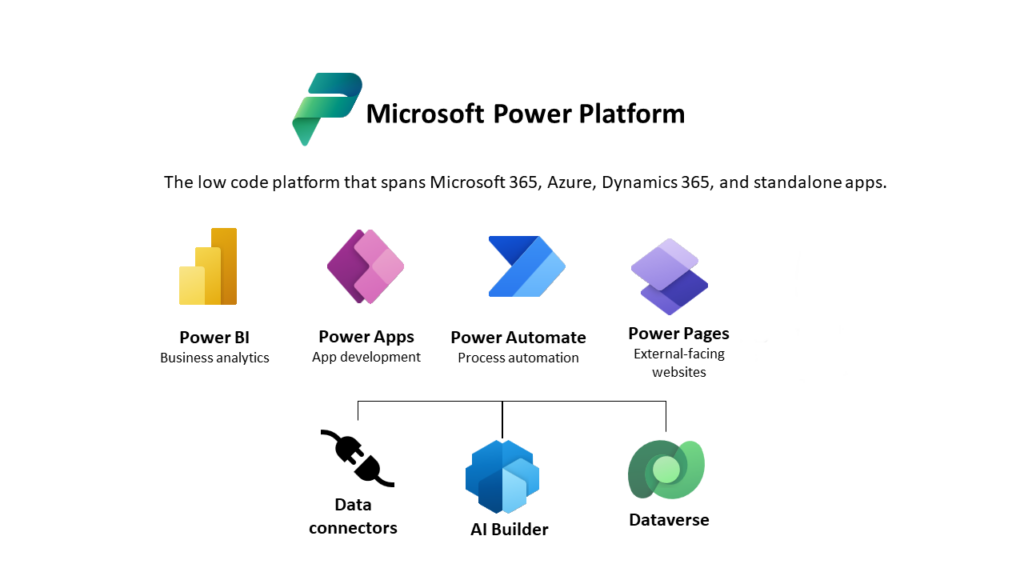
WPC SERVICES How Microsoft Power Platform Can Transform Your Business Reliable, professional services designed to help your business grow and achieve lasting success. Category: Microsoft Solutions | Reading Time: 7 min | Topic: Digital Transformation In an era where operational agility defines competitive advantage, businesses that leverage the right technology stack are not just surviving — they are setting the benchmark for their industries. Microsoft Power Platform has emerged as one of the most powerful, accessible, and cost-effective digital transformation tools available to businesses of all sizes today. From automating repetitive workflows to building custom enterprise applications without extensive coding knowledge, Power Platform is fundamentally changing how organisations operate, make decisions, and serve their customers. This guide provides a comprehensive look at what Microsoft Power Platform is, what it consists of, and — most importantly — how it can deliver measurable, lasting transformation for your business. What Is Microsoft Power Platform? Microsoft Power Platform is an integrated suite of low-code and no-code tools designed to help businesses analyse data, automate processes, build applications, and create intelligent virtual agents. It is built natively on Microsoft Azure and integrates seamlessly with Microsoft 365, Dynamics 365, and hundreds of third-party services through connectors. The platform consists of five core components: Power Apps — for building custom business applications Power Automate — for workflow and process automation Power BI — for data analytics and business intelligence reporting Power Pages — for building external-facing business websites Microsoft Copilot Studio — for creating AI-powered virtual agents and chatbots Together, these tools form a cohesive ecosystem that empowers both technical and non-technical users to solve complex business challenges with speed and precision. The Business Case for Microsoft Power Platform The traditional approach to enterprise software development is expensive, time-consuming, and heavily reliant on IT departments. Custom applications can take months or even years to develop, and by the time they are deployed, business needs have often shifted. Power Platform disrupts this model entirely. According to a Forrester Total Economic Impact study commissioned by Microsoft, organisations that deployed Power Platform reported a return on investment of up to 188% over three years. Beyond ROI, businesses reported significant reductions in process completion time, lower dependency on external developers, and improved employee satisfaction due to reduced manual workloads. The platform democratises technology. It places the power to build, automate, and analyse directly in the hands of business users — those closest to the problems that need solving. Power Apps: Building Custom Business Applications at Speed One of the most transformative capabilities of Power Platform is Power Apps — a low-code application development environment that enables businesses to build custom apps tailored precisely to their operational needs. Whether you need a field service management app, a customer onboarding portal, an inventory tracking tool, or an internal HR request system, Power Apps allows you to build it in a fraction of the time and cost of traditional software development. Apps can be deployed on web browsers, iOS, and Android devices, making them accessible to your entire workforce regardless of location. Power Apps integrates natively with Microsoft Dataverse, SharePoint, SQL Server, Dynamics 365, and over 900 data connectors — meaning your custom applications can draw from and write to virtually any data source your business already uses. This eliminates data silos and creates a unified operational environment. For businesses that have been managing critical processes through spreadsheets or outdated legacy systems, Power Apps represents a genuine step-change in efficiency and accuracy. Power Apps: Building Custom Business Applications at Speed Manual, repetitive tasks are among the most significant drains on organisational productivity. Data entry, approval processes, report generation, email notifications, file management — these activities consume thousands of employee hours every year and introduce unnecessary risk of human error. Power Automate addresses this directly. It enables businesses to design, deploy, and manage automated workflows that connect applications, trigger actions based on events, and process data without human intervention. Common use cases include: Automated approval workflows — routing purchase orders, leave requests, or invoice approvals through predefined chains with notifications at every stage Data synchronisation — keeping records consistent across CRM, ERP, and SharePoint without manual updates Email and notification automation — triggering personalised communications based on customer actions or internal events Robotic Process Automation (RPA) — using Power Automate Desktop to automate legacy desktop applications that lack modern APIs The result is a leaner, faster, and more accurate operation. Employees are freed from low-value repetitive work and redirected towards strategic, high-impact activities that genuinely drive business growth. Power BI: Turning Data Into Strategic Decisions Data is only as valuable as your ability to understand and act on it. Many businesses are sitting on vast amounts of operational data — spread across spreadsheets, databases, CRM systems, and cloud applications — but lack the tools to consolidate, visualise, and extract meaningful insight from it. Power BI is Microsoft’s industry-leading business intelligence platform. It connects to hundreds of data sources, transforms raw data into interactive dashboards, and delivers real-time reporting that enables leaders to make informed, evidence-based decisions. With Power BI, your management team can monitor KPIs in real time, identify trends before they become problems, and present complex data in a format that is instantly understandable to stakeholders at every level of the organisation. Power BI also integrates directly into Microsoft Teams and SharePoint, embedding live data dashboards within the tools your teams are already using every day — eliminating the friction of switching between platforms to access critical business intelligence. Dataverse: The Foundation of a Connected Business Underpinning the entire Power Platform ecosystem is Microsoft Dataverse — a secure, scalable, cloud-based data storage and management service. Dataverse serves as the single source of truth for your business data, providing a structured, governed environment in which all your Power Platform applications and workflows operate. Unlike traditional databases that require specialised expertise to manage, Dataverse is designed for business users. It offers role-based access control, built-in security policies, audit logging, and compliance features that align with